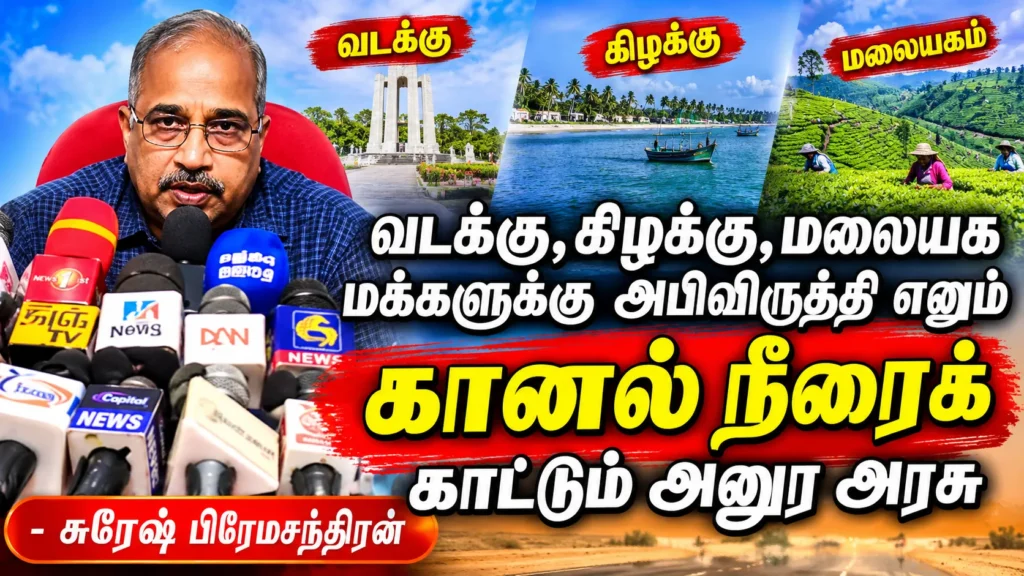
Former Jaffna District MP and Democratic Tamil National Alliance (DTNA) Co-Leader Suresh Premachandran has been in the spotlight amid renewed efforts by Tamil political parties to coordinate their positions on issues affecting the Tamil community.
He has been involved in discussions between the DTNA and the Ilankai Tamil Arasu Kachchi (ITAK), including talks on organising a joint public protest against the Government’s proposed anti-terrorism legislation. He has also called for greater cooperation among Tamil political parties on issues such as Provincial Council Elections, land rights, devolution and a political solution to the Tamil national question.
Against this backdrop, the Sunday Observer spoke to Premachandran about the challenges facing the Tamil community, the prospects for greater political cooperation and the Government’s policies.
Excerpts of the interview :
Q: You have recently called for greater cooperation between the Democratic Tamil National Alliance (DTNA) and the Ilankai Tamil Arasu Kachchi (ITAK). What has changed to make such cooperation possible now, after years of political divisions?
Political divisions can exist among any political party. For the last six months, the DTNA and ITAK have been engaging in dialogue and discussing various political matters, specifically on working together on common issues affecting the Tamil public.
In local Government areas, there are issues on both sides. So, to eradicate them, we are working together. That is the new decision we made. Tamil people need unity among Tamil parties, and the DTNA is prepared to discuss cooperation with any party that comes forward.
Q: Is this cooperation a genuine turning point in Tamil politics, with the potential to develop into a common political platform, or is it merely an understanding to work together on selected issues?
It starts with common issues, but with a longer-term goal of bringing changes and justice to the Tamil people by bringing all Tamil parties together. The DTNA already consists of five parties with a common understanding and constitution, and they are ready to work or discuss a united front with ITAK or others willing to join.
Q: Tamil voters have repeatedly expressed disappointment with their political representatives. Does the Tamil political leadership recognize that it has lost public confidence? If so, what needs to change to regain that trust?
While there may be disappointment, the public has not lost confidence in their representatives.
Major issues causing disappointment include thousands of displaced people unable to return to their lands after 17 years of war, with land occupied by armed forces, the Mahaweli Authority, Wildlife Department, and Archaeological Department.
All the successive Governments promised to release land, but it has not happened in a satisfying way. There is a long way to go. Even under the present Government, which has been in power for the last two years, voters remain disappointed due to this reason.
These are some of the areas where Tamil People are disappointed with the Tamil Political parties because they feel their representatives are not taking such matters very seriously with the Government. The Tamil politicians alone cannot do this. It should be done by the Government as central authorities control the military and State bodies responsible for land release.
Q: Looking back at the period since the end of the war in 2009, what has been the biggest mistake made by Tamil political leaders, and what lessons should they draw from it?
After the war ended in 2009, the Tamil Politicians thought that issues prevailed could be settled down in a united Sri Lanka under a Federal System.
However, the primary issue is not the mistakes made by Tamil parties, but the central Government’s unwillingness to resolve matters despite ongoing dialogues since 2009. Successive Governments were not cooperative enough. They were not interested in those matters very much.
If the Provincial Councils are functioning and the Constitution is implemented fully, many of the issues can be sorted out. Therefore, you cannot put the blame on the Tamil political parties.
Furthermore, central authorities have failed to develop essential regional infrastructure such as the Palaly Airport (Jaffna International Airport) and KKS Harbour, which would boost diaspora investment, tourism, and direct trade in the North. If such infrastructure is well developed, imports, especially from India would reach the North, East and the North Central parts of the country in fewer hours than coming via Colombo.
Q: The Government has pledged to repeal the Prevention of Terrorism Act (PTA) and has proposed the Protection of the State from Terrorism Bill (PSTA) as its replacement. What is your assessment of the proposed legislation?
I was in Parliament as an MP for nearly two decades. Current President Anura Kumara Dissanayake was also in Parliament as a member, and he campaigned to abolish the PTA. His election manifesto at the Presidential Election also said the same thing. But now after two years, the Government is introducing the PSTA to protect itself.
We, the Tamil political parties know how many thousands of our youngsters were badly affected by the PTA. They were detained in prisons without any investigation. We believe existing laws are sufficient to handle security concerns. Therefore, we strongly oppose the proposed law. As there is no war and there is no need to be afraid of the people of our own country, the PTA should be fully withdrawn without any replacement.
Q: The question of devolution appears to have reached a stalemate between the North and the South, with little progress towards a political settlement. Is the Tamil political leadership prepared to move beyond the 13th Amendment and pursue a more comprehensive constitutional arrangement that addresses Tamil political aspirations?
Tamil leadership will support going beyond the 13th Amendment if the Government satisfies the total aspirations of the Tamil-speaking people, though past leaders failed to fulfill promises to do so.
The immediate priority is holding Provincial Council elections, which have been delayed for 10 years. The delay is a denial of people’s rights. The present Government also promised to hold the Provincial Councils elections within one year after coming to power. But it has been two years now, but the election was not held.
Despite discussions to change the electoral system relating to the Provincial Council election, there is no need to do it now. The election should be held now under the existing system without further delay and any change to the electoral system can be done later properly.
Electoral systems across parliamentary, provincial, and local levels should remain uniform and stable, rather than creating fragmented systems. If we are to run efficient Provincial Councils or local Governments, there should be a proper administrative system in place.
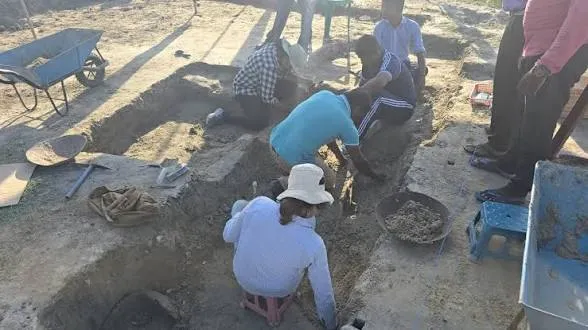
Q: The Government appears keen to demonstrate its commitment to justice through developments such as the Chemmani and Kurukkalmadam excavations. Do these developments give you confidence that the Government is genuinely prepared to address the legacy of wartime abuse? Or do you still believe international mechanisms are necessary to ensure accountability and justice for victims and their families?
Like some of the previous Governments, this Government also told the United Nations’ Human Rights Commission (UNHRC) that they are not supporting an international mechanism on this issue.
Past excavations such as Chemmani and Mannar yielded hundreds of skeletons without leading to concrete action or justice. Sri Lanka lacks the technology such as DNA testing and financial capacity to conduct proper investigations, making international mechanisms and assistance from the UN essential for credible accountability. That will build trust in the Government. Other than excavating, the Government has not done anything until today regarding these mass graves. Merely issuing statements is not enough.
Domestic investigations lack credibility because the Government has consistently failed to demonstrate genuine commitment, leading the public to demand international investigations due to a total lack of faith in internal processes.
Q: Beyond the traditional political demands concerning devolution, missing people and land rights, what new problems have emerged in the North that require urgent political attention? Are there emerging social, economic, demographic or livelihood-related concerns that Tamil political representatives have not adequately addressed?
Demands regarding land, missing people, and devolution should not be seen as traditional demands, but the most important post-war issues faced by Tamil people as the Governments have failed to address them for 17 years. That is why we always talk about those matters. If the Government had resolved them, we would not have to discuss them again and again.
In terms of economic development, no new factories or investments have been established in the war-affected North. The central Government must first fulfill the basic needs in those areas. In this regard, holding Provincial Council elections and devolution of power are necessary, so an elected body can facilitate diaspora investment for regional development.
Q: Residents in several urban councils in the Northern Province complain that basic municipal services, including garbage collection, road maintenance, drainage, sanitation and waste management, are being neglected. At the same time, local political representatives appear to devote considerable attention to political commemorations and symbolic issues. Is Tamil local political leadership losing sight of its primary responsibility to deliver essential services?
I do not agree with that allegation. As far as the Northern Province is concerned, local bodies are performing their duties effectively despite financial constraints. I meet people from these areas regularly and they do not complain about these Local Government Bodies. However, the central Government is attempting to destabilise elected local bodies by bypassing them and diverting funds to ‘Praja Shakthi’ committees aligned with the Government. Through those Praja Shakthi programmes, the Government has sidelined the Urban Councils from doing their work. Funds that should be allocated directly to elect Local Government Bodies are being redirected to Praja Shakthi committees.
Q: Are Tamil political parties prepared to work constructively with the present Government if it demonstrates a genuine commitment to constitutional reform, devolution and addressing the longstanding grievances of the Tamil people? Where would you draw the line between political cooperation and political compromise?
Tamil parties are willing to work with any Government that genuinely addresses Tamil aspirations. Even though we pushed for a separate country earlier, now we are ready to settle the matters in a united country. Sri Lanka being a multi-religious, multilingual, and multi-communal country, needs to have a Federal Constitution. Not a single central Government is willing to discuss this matter.
Transitioning from demanding a separate State to accepting a federal framework within a united Sri Lanka represents a major compromise. If the Government holds Provincial Council elections and demonstrates sincerity, trust can be established for collaboration.